Saliva Drug Testing: Everything You Need to Know About Oral Fluid Drug Screening
Saliva drug testing, also known as oral fluid drug testing, is an increasingly popular method of detecting recent drug use in both workplace and legal settings. Non-invasive, cost-effective, and highly convenient, oral fluid testing offers a reliable alternative to traditional methods like urine or blood tests.
In this comprehensive guide, we explain how saliva drug testing works, highlight its key advantages and limitations, and explore its applications in workplace drug testing, legal enforcement, and personal use.
1. What Is Saliva Drug Testing?
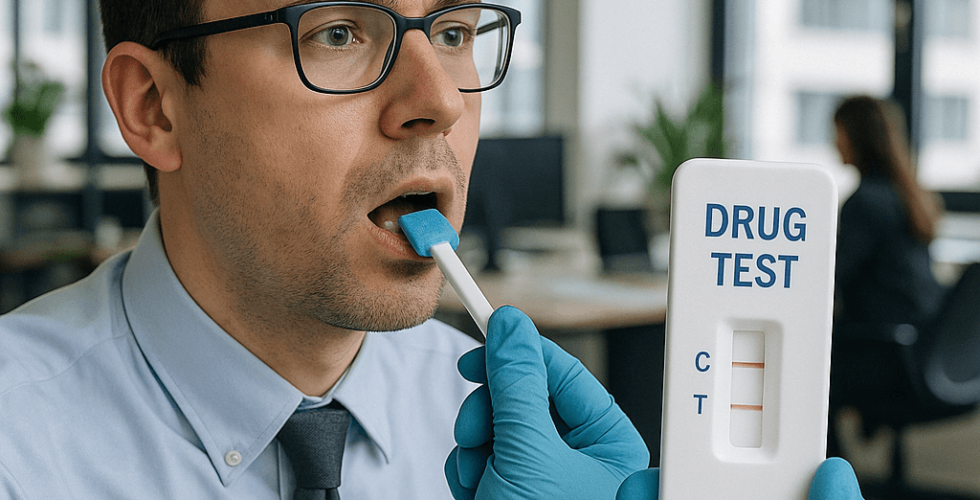
Saliva drug testing involves analyzing a sample of oral fluid (commonly referred to as saliva) to detect the presence of specific drugs or their metabolites. The test is usually conducted by placing a swab inside the subject’s mouth to collect the fluid. It’s a straightforward, quick, and minimally invasive method that offers several benefits over urine drug testing.
The sample is either:
- analyzed on-site using a rapid screening test device, or
- sent to a laboratory for advanced analysis using techniques like mass spectrometry.
How Oral Fluid Drug Testing Works
- Sample Collection: A collector uses a mouth swab to gather oral fluid from under the tongue or inner cheek.
- Initial Screening: A swab drug test kit may be used to give preliminary results within minutes.
- Confirmatory Testing: If the initial result is a positive test, samples are analyzed using more advanced laboratory equipment.
For legal and high-risk scenarios, labs use confirmatory tools such as gas chromatography-mass spectrometry (GC-MS) or liquid chromatography-mass spectrometry (LC-MS/MS) for accurate results, often cited in publications like Forensic Science International (Forensic Sci Int) and Sci Int Doi.
2. Benefits of Saliva Drug Testing
There are several reasons why employers, legal authorities, and individuals turn to oral fluid testing:
- ✅ Non-invasive: No need for private bathroom facilities as with urine drug testing.
- ✅ Real-time detection: Best suited for identifying recent drug use (e.g., within the last 24–48 hours).
- ✅ Difficult to cheat: The collection process is observed, minimizing the risk of substitution or adulteration.
- ✅ Fast results: Some screening tests provide results in under 10 minutes.
- ✅ Easy sample handling: No special storage requirements like blood samples.
According to the Government of Canada, saliva drug testing is increasingly recognized as a practical tool for detecting recent drug use, particularly in safety-sensitive workplaces. While there is currently no federal mandate for oral fluid testing in Canada, many provincial regulators and employers adopt this method as part of their broader workplace impairment policies, especially in sectors like transportation, construction, and manufacturing.
AccordingTo the U.S. Department of Transportation (DOT), oral fluid drug testing is now authorized in federally regulated testing programs due to its convenience and reliability.
3. Limitations of Oral Fluid Drug Testing
Despite its advantages, saliva drug testing has certain limitations:
- 🔻 Short detection time: Most drugs are only detectable in oral fluid for 24–48 hours.
- 🔻 Lower sensitivity: Compared to urine tests, it may miss low concentrations.
- 🔻 Variable accuracy: Factors like hydration, saliva production, and oral hygiene can impact test performance.
- 🔻 Limited scope: Some drugs, particularly those metabolized quickly, may not be reliably detected.
4. Comparing Drug Testing Methods
Here’s how saliva drug testing compares with other common types:
| Testing Method | Detection Time | Invasiveness | Typical Use | Cost |
|---|---|---|---|---|
| Oral Fluid (Saliva) | 1 to 2 days | Low | On-site, workplace | Moderate |
| Urine | 2 to 7 days | Medium | Employment, legal | Low |
| Blood | Few hours to 1 day | High | Clinical, forensic | High |
| Hair | Up to 90 days | Medium | Historical drug use | High |
While urine drug testing remains the standard for many employers, fluid drug screening with saliva is increasingly used for rapid, on-the-spot testing, especially in roadside law enforcement or safety-sensitive work environments.
5. Common Substances Detected in Saliva Drug Testing
Saliva tests typically screen for a wide range of drugs of abuse:
- THC (Cannabis) – detectable for up to 24 hours post-use
- Cocaine
- Amphetamines (including MDA and MDMA)
- Opioids (heroin, morphine, codeine)
- Methamphetamines
- Alcohol (in some dual drug alcohol testing kits)
- Benzodiazepines (in extended panels)
Saliva tests are generally more effective at identifying recent use of stimulants, opioids, and cannabinoids. For example, studies led by Huestis MA and published in Forensic Sci Int demonstrate high accuracy in detecting THC using oral fluid testing within a few hours of use.
6. Factors That Influence Test Results
Several elements can affect the reliability and outcome of a saliva drug test:
- Timing: The closer the test is to drug consumption, the higher the detection probability.
- Substance type: Lipid-soluble drugs like THC may linger longer in oral tissues.
- Oral fluid volume: Dehydration can reduce sample quality.
- Oral hygiene: Brushing teeth or using mouthwash can affect detection time.
- Test device quality: Approved and calibrated drug screening devices provide more accurate readings.
7. Use Cases for Saliva Drug Testing
Workplace Drug Testing
In Canada, Australia, the United States, and the UK, employers increasingly use oral fluid drug tests for routine drug screening, especially in high-risk industries (transport, construction, manufacturing). Benefits include immediate results and minimal disruption to work.
Health Canada encourages safe and responsible drug monitoring practices in workplaces.
Legal and Forensic Use
Saliva testing is now approved in multiple legal contexts:
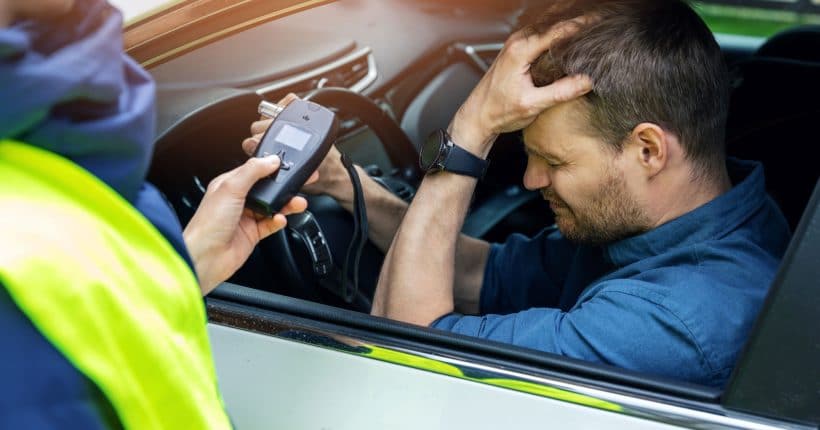
- Roadside testing by law enforcement for substances like THC or cocaine
- Court-mandated testing
- Post-incident investigations
Devices used must meet standards from regulatory bodies like SAMHSA, DHHS, and the FDA.
Personal or Home Testing
Parents, schools, or individuals may choose saliva drug test kits for personal use. These provide a quick way to assess recent drug or alcohol use, offering peace of mind or early intervention opportunities.
8. Frequently Asked Questions (FAQ)
How accurate are saliva drug tests?
Modern oral fluid drug tests provide high accuracy, especially when confirmed via laboratory techniques like mass spectrometry. On-site tests are generally accurate but may need lab confirmation in borderline cases.
How long can drugs be detected in saliva?
Most drugs can be detected for 24 to 48 hours. However, this may vary depending on the substance and usage pattern. THC, for instance, can be detectable for up to 72 hours in some individuals.
Are there certain drugs more likely to be detected with saliva tests?
Yes. Stimulants like cocaine, methamphetamines, and opioids show up readily in oral fluid, especially shortly after use.
What happens during a saliva drug test?
A swab drug test involves placing a small, absorbent pad inside the cheek or under the tongue for 1–3 minutes. The fluid is either tested on the spot or sent to a lab for more detailed analysis.
What’s the difference between workplace and legal testing procedures?
In workplace drug testing, rapid screening devices may suffice. In legal cases, such as DUI charges, samples are often lab-analyzed for confirmation and evidentiary integrity.
9. Regulatory Framework and Research
Several organizations and researchers shape the development and approval of oral fluid testing technologies:
- SAMHSA: Sets the standards for workplace testing in the U.S.
- DHHS: Oversees national health and human services, including drug policy.
- FDA: Approves drug testing devices for commercial and forensic use.
- CNE (Canada): Monitors occupational health compliance.
- Huestis MA, Gorelick DA, and Debra Sullivan: Renowned researchers in drug detection.
- CRC Press: Publisher of key forensic toxicology resources.
10. Final Thoughts: Is Saliva Drug Testing Right for You?
Whether you’re an employer seeking reliable drug screening, a legal authority ensuring public safety, or an individual concerned about drug or alcohol testing, saliva drug testing offers a practical and efficient solution. Its non-invasiveness, ease of use, and rapid results make it ideal for a wide variety of use cases.
However, it’s important to choose reliable fluid drug testing solutions and understand the limits of detection time. For comprehensive and compliant testing kits tailored to your needs, consult a reputable provider such as Alco Prevention Canada.
Need help choosing a saliva drug test kit for your workplace or personal use?
Visit our product catalog or contact our specialists for tailored advice.